
ETH Zurich Architecture Students Explore GreeNest at NTUA
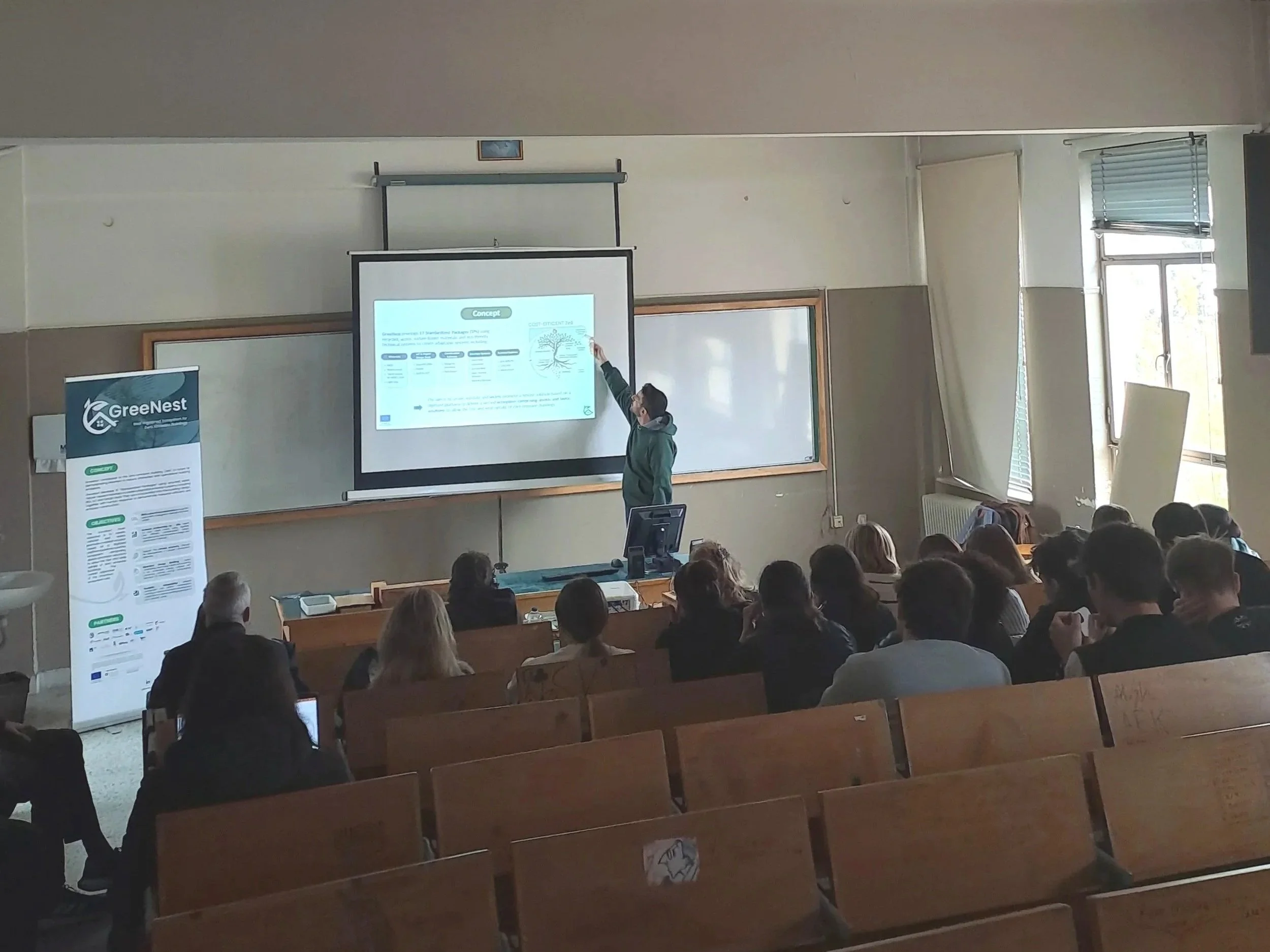
On 19 March 2026, GreeNest, in collaboration with the Boulouki collective and the Department of Architecture at ETH Zurich, organised a presentation and hands-on workshop for architecture students at the National Technical University of Athens (NTUA).
The event began with an introduction to the GreeNest project and its contribution to the development of Zero-Emission Buildings (ZeB). Giannis Atsonios (NTUA) presented the project’s approach to reducing both operational and embodied carbon emissions through circular, energy-efficient, and nature-based construction solutions. The session also introduced key concepts related to Life Cycle Assessment (LCA) and the European policy framework supporting sustainable buildings.
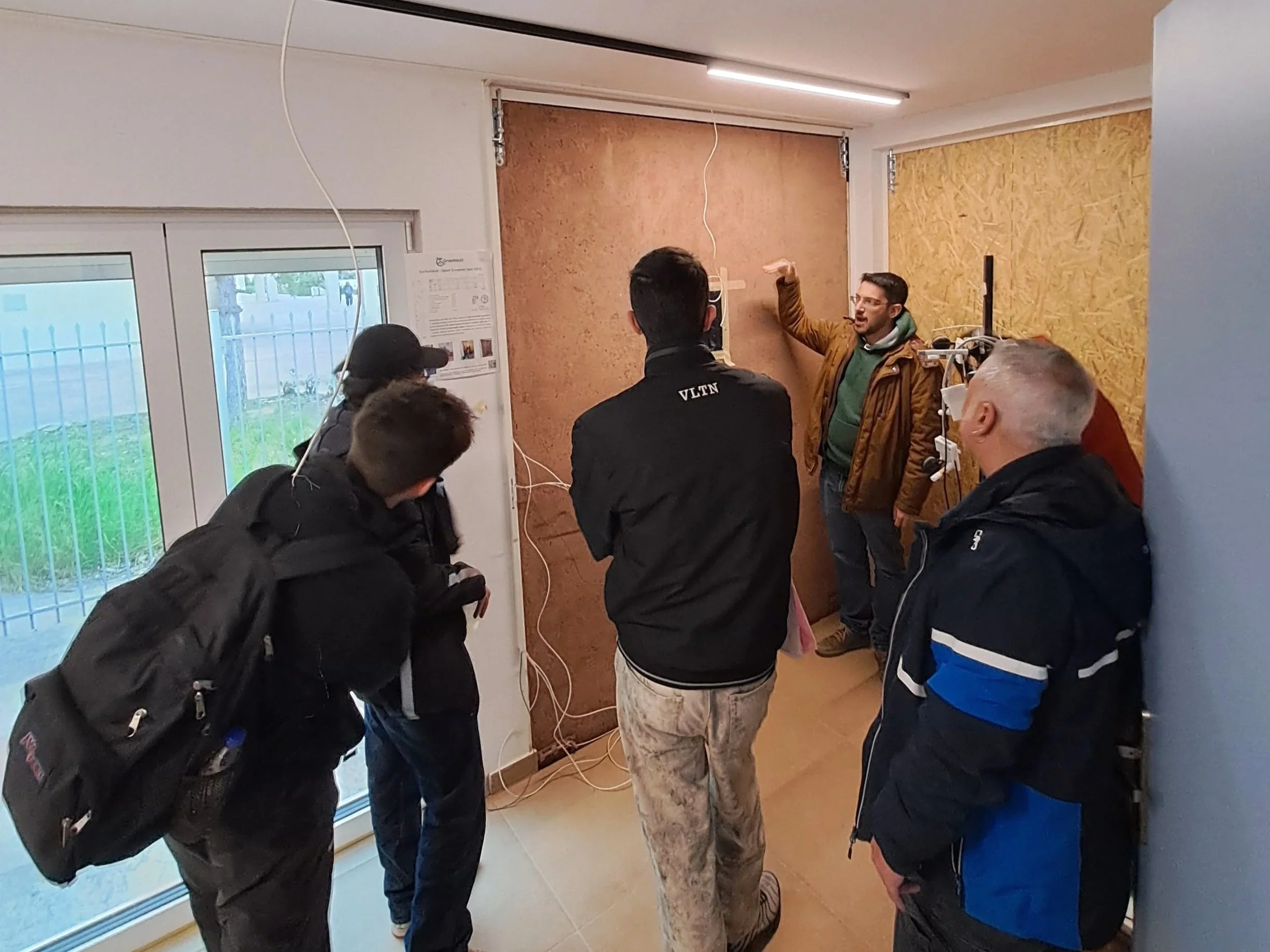
Students then visited the Athens Sandbox, where they explored several installed GreeNest Standardized Packages, including SmartWall (SP09), EcoTechWall (SP11), and Heat Harvest Window (SP12). They also examined samples of light clay bricks (SP17) and learned about the Nest Control (SP16) monitoring system used to evaluate energy performance, thermal comfort, and HVAC system operation.
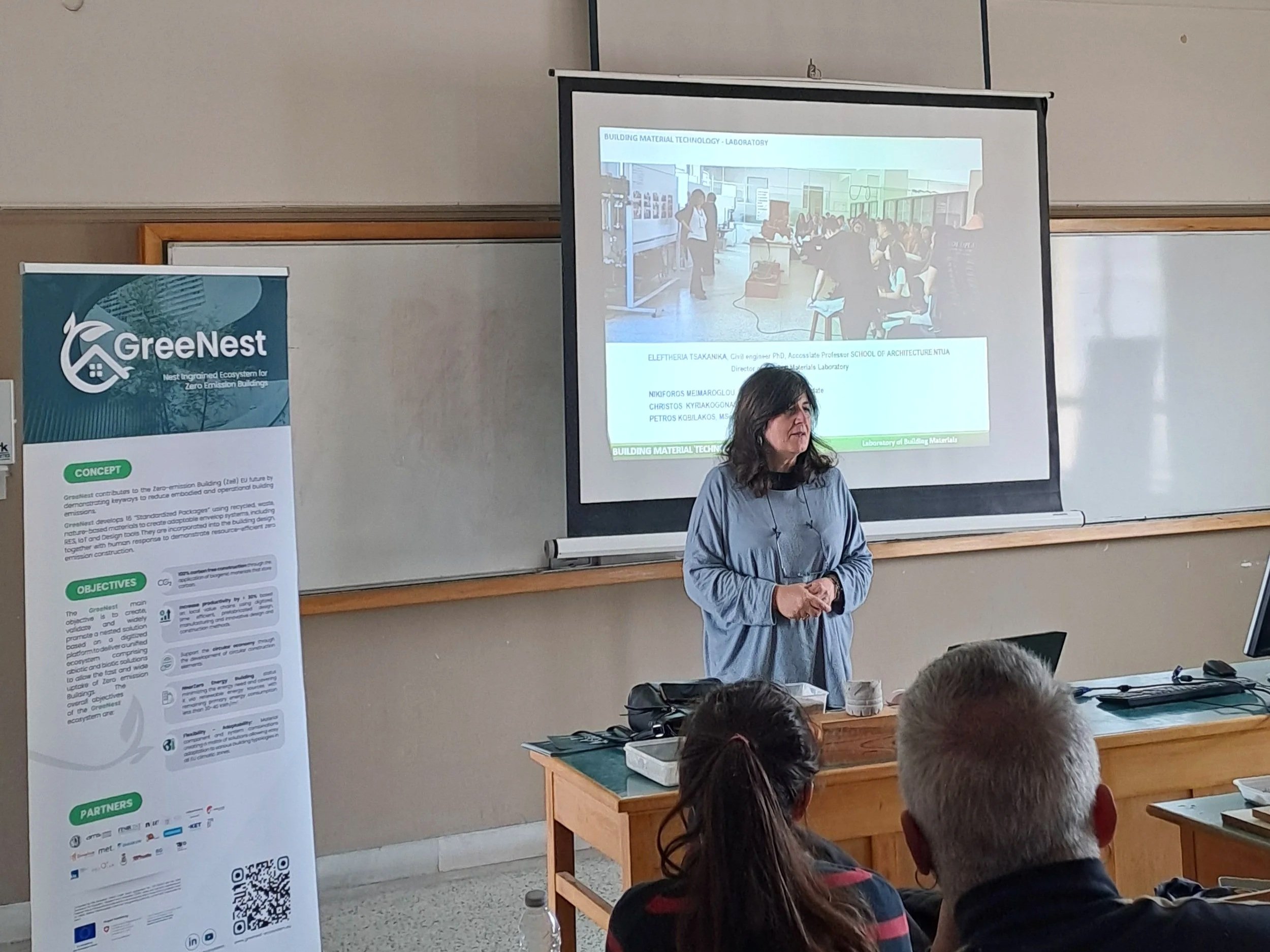
Prof. Eleftheria Tsakanika (NTUA) presented research and student projects from the NTUA’s Building Materials Lab. Her presentation showcased examples of contemporary, traditional, and historic buildings made with nature-based materials, highlighting how traditional building knowledge and current research can support sustainable and resilient construction practices.
The second part of the event focused on a hands-on workshop that highlighted the use of earth as a building material. The workshop was led by:
Nikiforos Meimaroglou (NTUA, Boulouki) introduced the use of earth as a building material and led the rammed earth exercise.
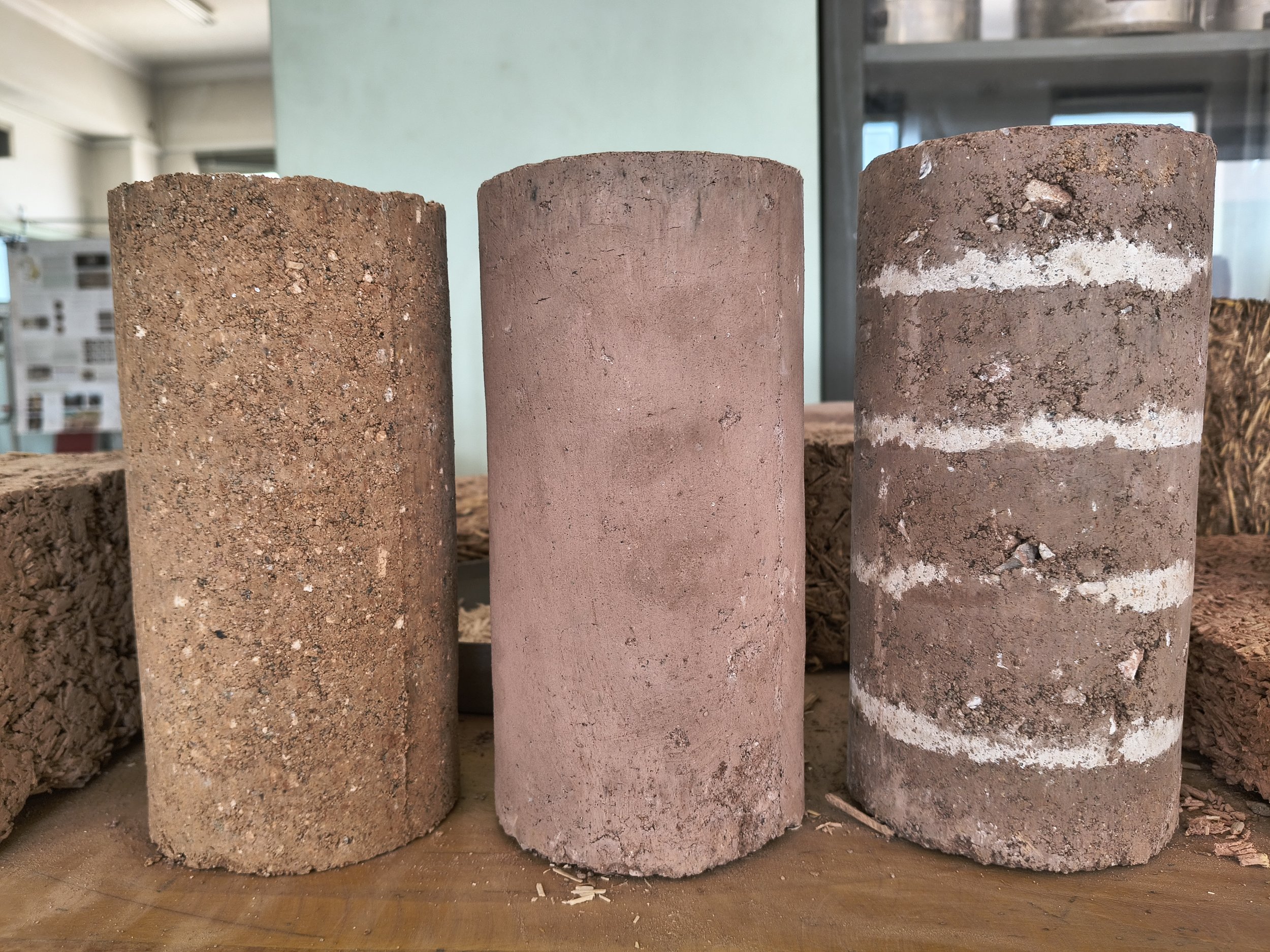
Students produced three cylindrical rammed earth specimens using different earth compositions and layering techniques. One specimen used soil collected from the fire-affected landscape of Varnavas, directly connecting the exercise to the local material context. Another used a more standardised mix stabilised with lime and pozzolan, while a third combined Varnavas soil with visible lime layers between the compacted earth layers.
Afroditi Maxaira (NTUA) guided the light clay applications
Students produced earth blocks using clay and hemp in different proportions. Two mixes were created: a lightweight insulating composition and a denser, more compact variation. This allowed participants to compare how different material ratios influence the structure, density, and thermal potential of the final product.
Christos Kiriakogonas (NTUA) led the plaster applications workshop, enabling students to test mixtures of earth, sand, and lime on fibreboard panels.
Participants tested different mixtures of earth, sand, and lime applied onto fibreboard panels. The exercise focused on evaluating cracking behaviour, adhesion, texture, and workability, highlighting the importance of material testing and adaptation in sustainable construction
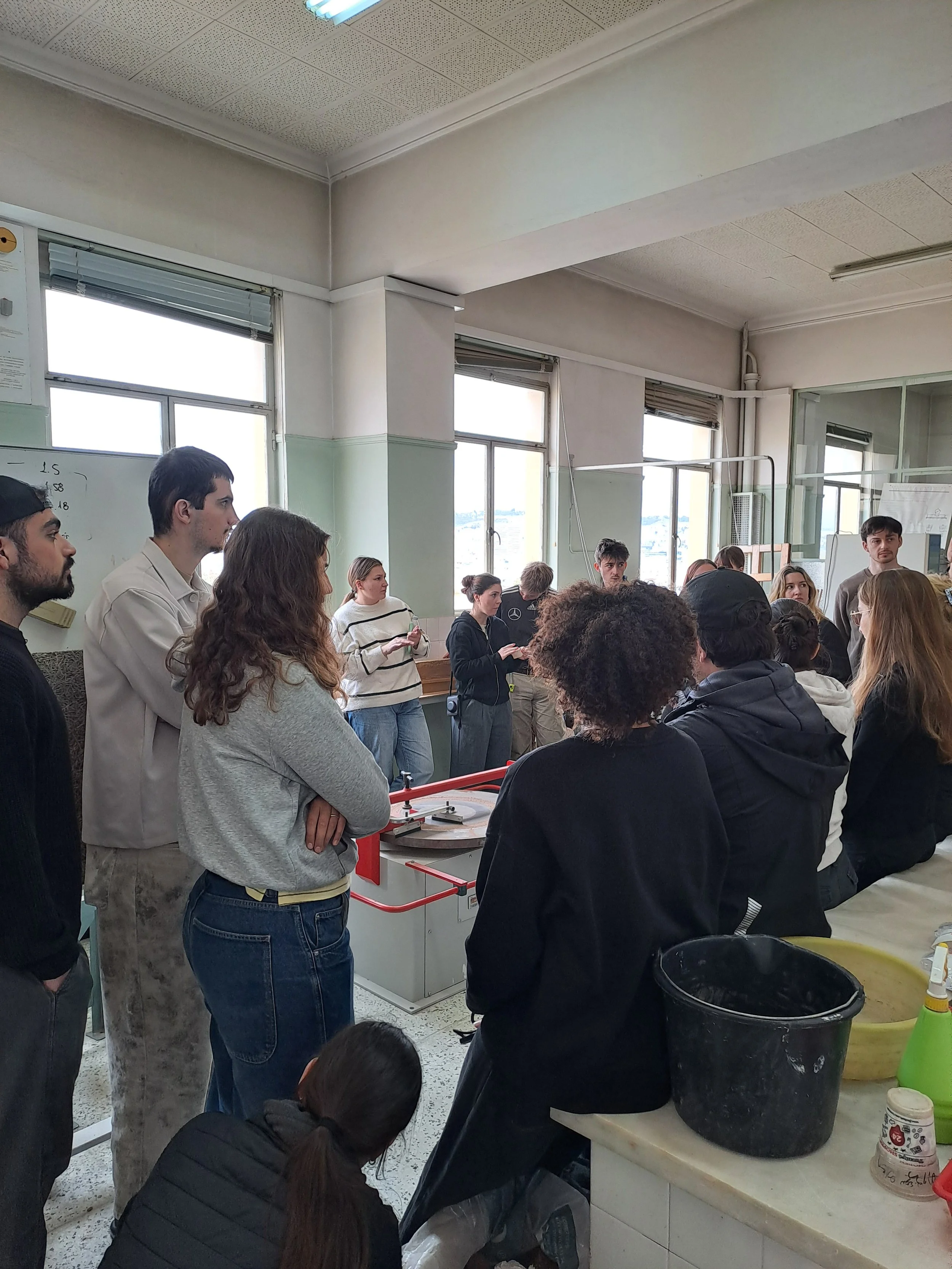
The workshop concluded with an open discussion, during which students reflected on their experience and highlighted the value of combining traditional knowledge, material experimentation, and innovative approaches to sustainable building design.